

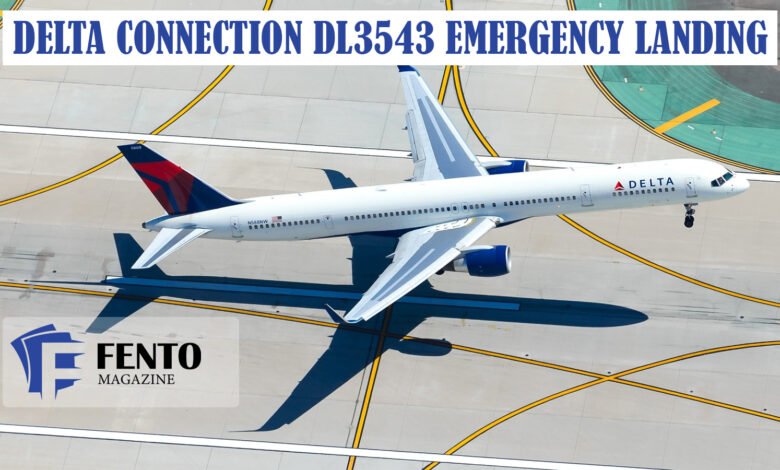
The Delta Connection DL3543 emergency landing ended the way most of these events do: with the aircraft back on the ground, passengers unhurt, and a lot of people online trying to figure out what actually happened. Based on the most detailed reports available, the regional jet departed Minneapolis–Saint Paul International Airport on July 7, 2025, stopped climbing well short of its planned altitude, declared an emergency, and returned for a safe landing.
That short summary hides plenty of useful detail, though. This article walks through the timeline, explains what the emergency code meant, separates confirmed facts from guesswork, and covers what passengers can expect if their own flight ever turns around.
Delta Connection DL3543 Emergency Landing at a Glance
Here is the short version for readers who want the essentials first:
- Flight: Delta Connection DL3543, a regional flight sold under the Delta Air Lines brand
- Date: Reported as Monday, July 7, 2025
- Departure airport: Minneapolis–Saint Paul International Airport (MSP)
- What happened: The aircraft leveled off near 21,000 feet, the crew set emergency transponder code 7700, and the flight returned to land
- Aircraft: Reported as an Embraer E175, registration N259SY
- Outcome: Landed safely with no reported injuries
- Cause: Not publicly confirmed
The safe outcome is the one point that every report agrees on. Some of the other details, especially the operator and the exact landing airport, vary depending on the source, which is covered later in this article.
What Happened on Delta Connection Flight DL3543?
Short answer: Shortly after takeoff from Minneapolis, the crew of DL3543 detected a problem serious enough to declare an emergency, stopped their climb, and brought the aircraft back for a precautionary landing. Everyone on board got off the plane safely.
The Climb That Stopped Short
A normal regional flight out of Minneapolis climbs steadily for roughly 15 to 25 minutes before reaching cruise altitude, which for a jet like the E175 is typically in the mid-30,000-foot range. Flight-tracking data cited in reports on DL3543 shows the aircraft leveling off at about 21,000 feet instead.
That detail matters. When an airliner stops climbing well below its planned altitude, it usually means the crew has paused to work through a checklist, coordinate with air traffic control, or keep the aircraft in a stable configuration while they assess a problem. It does not, by itself, mean anything dramatic happened in the cabin.
Squawking 7700 and Turning Back
The crew then set their transponder to 7700, the universal code for a general emergency. That code immediately flags the aircraft on air traffic control screens and gives the flight priority handling. From there, the jet turned back and landed.
Most accounts describe the landing as a return to Minneapolis. One report instead places the landing at Chicago Midway, which would have been a continuation toward the destination rather than a return. Since the more detailed tracking-based account points to Minneapolis, that is the most likely version, but readers should know the reports are not perfectly consistent.
Who Operates Delta Connection Flights?
Delta Connection is not a separate airline in the usual sense. It is a brand name Delta uses for regional flights operated by partner carriers. When you book a Delta Connection ticket, you buy it from Delta, check in through Delta, and earn SkyMiles as usual, but the pilots, flight attendants, and aircraft often belong to a regional airline flying on Delta’s behalf. The Delta Connection network has historically included carriers such as Endeavor Air (a Delta subsidiary), SkyWest Airlines, and Republic Airways.
This arrangement is why so many early reports about DL3543 disagreed on who was flying the plane. Some articles named Endeavor Air, while others pointed to SkyWest. Readers who follow aviation news will recognize this pattern: the flight number belongs to Delta, but the operating carrier can change by route, season, or even day.
The Aircraft Involved
Flight-tracking records cited in coverage of the event identify the aircraft as N259SY, an Embraer E175. The “SY” ending in the registration is a pattern commonly associated with SkyWest’s fleet, which supports the reports naming SkyWest as the operator. Still, Delta has not been widely quoted confirming that detail, so it is best treated as likely rather than certain.
The E175 is one of the most common regional jets in the United States. It usually seats around 70 to 76 passengers in a two-class layout and is built for short and medium routes like the ones Delta Connection flies out of its Minneapolis hub.
What Does Squawk 7700 Mean?
Short answer: Squawk 7700 is the four-digit transponder code pilots use to signal a general emergency. It alerts air traffic controllers right away and gets the flight priority routing and landing clearance.
Every airliner carries a transponder, a device that broadcasts a code identifying the aircraft to radar systems on the ground. Normally that code is a routine number assigned by air traffic control. In certain situations, pilots switch to one of three reserved codes:
- 7500: Unlawful interference, such as a hijacking
- 7600: Lost radio communication
- 7700: General emergency
Code 7700 is a broad category. It covers engine issues, pressurization problems, smoke warnings, hydraulic faults, flight control concerns, and serious medical emergencies. Pilots are trained to use it whenever a situation could affect safety, even if it later turns out to be minor. That is why many 7700 events end with a completely routine landing.
For travelers, the main takeaway is that a 7700 code is a request for help and priority, not a signal that a crash is imminent. Anyone who flies often, whether for work or travel, will eventually see a flight-tracking app highlight a 7700 flight, and almost all of them land without incident.
Why Did DL3543 Return? What Is and Isn’t Known
Short answer: The specific cause of the DL3543 emergency has not been publicly confirmed by Delta, the operating airline, or the Federal Aviation Administration.
This is where many articles about the Delta Connection DL3543 emergency landing go wrong. Several pages list possible causes, such as a mechanical problem, warning lights, or a passenger medical emergency, and then write as if one of those was confirmed. None of them has been established in any official statement that is widely available.
What can be reasonably said:
- The crew judged the situation serious enough to declare an emergency rather than simply request a return.
- The aircraft was stable enough to be flown back and landed normally.
- No injuries were reported.
What cannot be said with confidence:
- Which system triggered the concern
- Whether the issue was mechanical, electrical, or medical
- Whether the aircraft required repairs afterward
If the FAA or the National Transportation Safety Board publishes a record on the event, that will be the authoritative source. Until then, any article claiming a specific cause is guessing.
Emergency Landing vs Precautionary Return vs Diversion
These three terms get mixed together in headlines, but they mean different things.
Emergency landing is the broad umbrella term. It describes any landing made because of an urgent problem, whether the aircraft returns home, lands elsewhere, or lands at its planned destination with emergency services standing by.
Precautionary return (sometimes called an air turnback) means the aircraft goes back to the airport it just left. Crews often choose this because the departure airport is close, familiar, and usually has maintenance staff and spare aircraft for the airline. The DL3543 event, based on most reports, fits this category best.
Diversion means landing at an airport that was neither the origin nor the destination. Diversions are more common on longer flights, when the closest suitable runway is somewhere along the route.
Calling DL3543 a precautionary emergency return is the most accurate description. It was an emergency in the official sense, because 7700 was declared, but the response was controlled and preventive.
How Flight Crews Handle In-Flight Emergencies
Airline pilots spend a large part of their recurrent training in full-motion simulators practicing exactly this kind of scenario. The general sequence looks like this:
- Aviate: Keep the aircraft under control and stable. Leveling off, as DL3543 did, is often part of this step.
- Navigate: Decide where to go, considering weather, runway length, distance, and support at the airport.
- Communicate: Notify air traffic control, the airline’s operations center, and the cabin crew.
Pilots also work through manufacturer checklists for the specific warning or fault. On a regional jet, much of this coordination happens in a few minutes.
There is one practical issue many readers never consider: weight. An aircraft that has just taken off is usually heavier than its maximum landing weight because it is carrying fuel for the full trip. Larger jets can dump fuel. Most regional jets, including the E175, cannot, so crews either fly holding patterns to burn fuel or land overweight if the situation calls for it. An overweight landing is safe when flown carefully, but it triggers a required inspection afterward.
What Passengers Experience During a Return
From inside the cabin, a precautionary return often feels much calmer than the headlines suggest. Passengers on flights like DL3543 typically notice a few things:
- The aircraft stops climbing or makes a noticeable turn
- A pilot announcement explains, often briefly, that the flight is returning
- Flight attendants recheck seat belts and secure the cabin early
- Fire trucks and emergency vehicles line the runway on landing
The emergency vehicles worry people more than anything else, but they are standard procedure when a crew declares an emergency. They follow the aircraft as a precaution and usually leave once the airplane taxis normally to the gate.
What Happens to the Aircraft After an Emergency Landing
Once a plane like N259SY is back at the gate, it does not simply take off again. The airline’s maintenance team inspects the system that caused the alert, reviews the onboard fault data, and checks anything required by the landing itself, such as an overweight-landing inspection.
Depending on what they find, the aircraft may return to service within hours or stay out of service for days. Passengers are typically moved to a replacement aircraft, rebooked on later flights, or given other options if the trip is cancelled.
Practical Tips if Your Flight Turns Back
The DL3543 return is a good reminder that turnbacks happen, and a little preparation helps. If your flight ever returns to the gate:
- Stay seated and follow crew instructions. The crew may be managing information you cannot see.
- Check the Delta app quickly after landing. Rebooking options often appear there before the gate agent line forms.
- Keep your boarding pass and receipts. They help if you request a hotel, meal voucher, or refund.
- Know your refund rights. Under U.S. Department of Transportation rules, if a flight is cancelled or significantly changed and you choose not to travel, you are generally entitled to a refund.
- Ask about meals or lodging if delays run long. Airlines’ policies vary, so ask directly rather than assuming.
Why Some DL3543 Reports Don’t Match
Search for this flight and you will find dozens of pages repeating nearly identical summaries with conflicting details. Some name Endeavor Air, others SkyWest. A few cite July 8 rather than July 7. One places the landing in Chicago. Many contain placeholder text or generic safety advice with no connection to this specific flight.
This happens because popular flight-incident keywords attract mass-produced content, and errors spread as pages copy each other. When reading about any aviation event, give more weight to sources that cite flight-tracking data, aircraft registrations, or official statements, and be cautious with pages that describe “possible causes” as if they were confirmed.
Conclusion
The Delta Connection DL3543 emergency landing is a clear example of aviation’s safety system working as designed. A regional jet leaving Minneapolis on July 7, 2025, stopped its climb near 21,000 feet, the crew declared an emergency with code 7700, and the aircraft returned for a safe landing with no reported injuries.
What remains unknown is the cause, and that gap is worth respecting rather than filling with speculation. The most useful takeaway for travelers is simple: an emergency declaration is a tool crews use early and cautiously, and a calm, controlled return like this one is the system doing its job.
FAQs
What happened to Delta Connection flight DL3543?
It declared an emergency shortly after leaving Minneapolis on July 7, 2025, stopped climbing near 21,000 feet, and returned for a safe landing.
Was anyone hurt on DL3543?
No injuries were reported. The flight landed safely and passengers deplaned normally.
What caused the DL3543 emergency landing?
The cause has not been publicly confirmed by Delta, the operating airline, or the FAA.
What airline operated DL3543?
Reports conflict. The aircraft, N259SY, is associated with SkyWest Airlines, though some sources name Endeavor Air.
What plane was flight DL3543?
It was reported as an Embraer E175 regional jet with registration N259SY.
What does squawk 7700 mean?
It is the transponder code for a general emergency, giving the flight priority handling from air traffic control.
Is Delta Connection safe to fly?
Yes. Delta Connection carriers operate under the same FAA safety regulations as mainline U.S. airlines.
